Polar Bear Compound in Stanley Park, Vancouver, BC, Canada
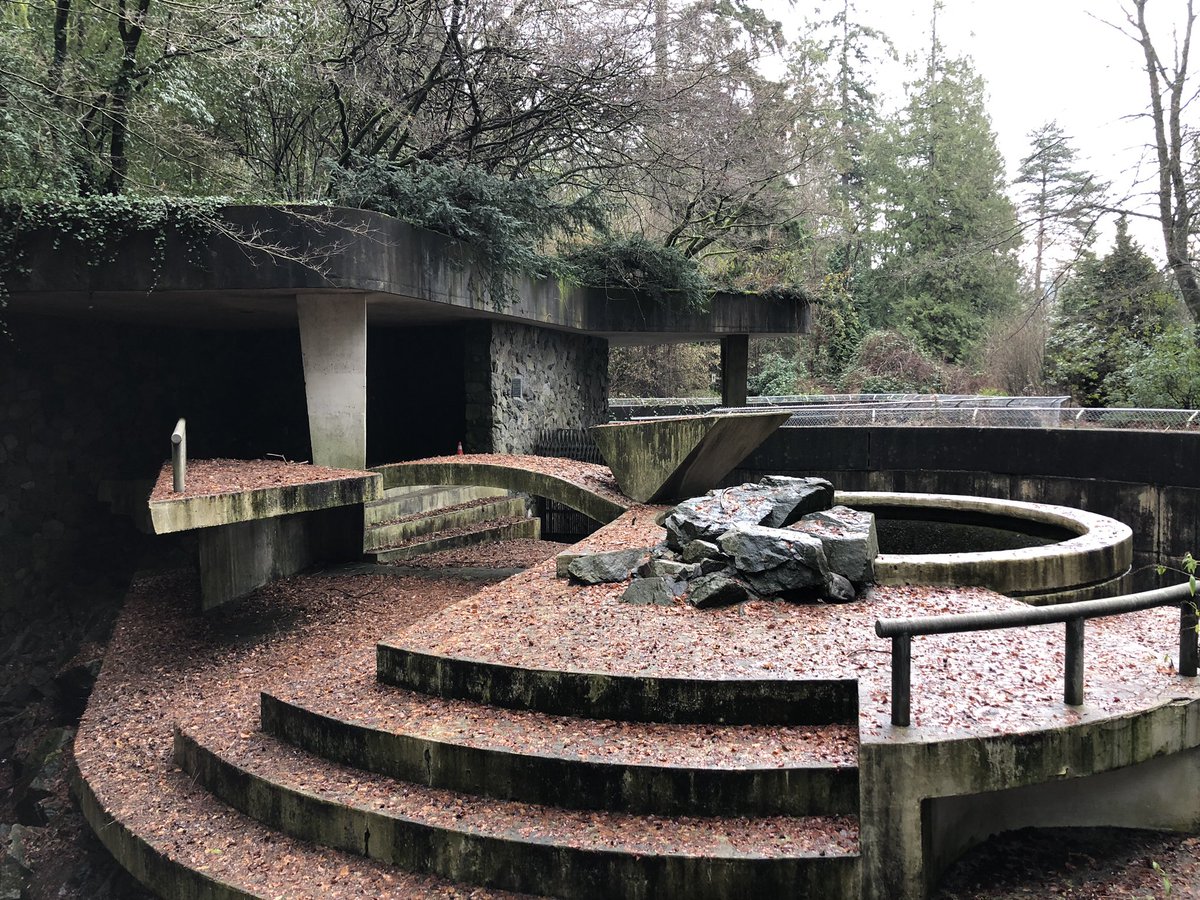
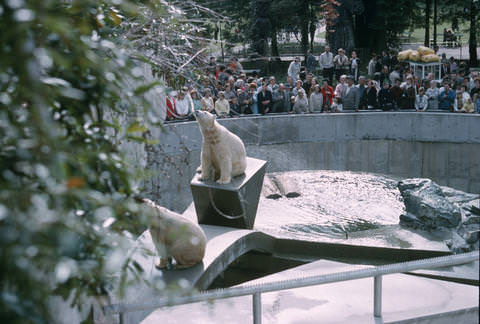
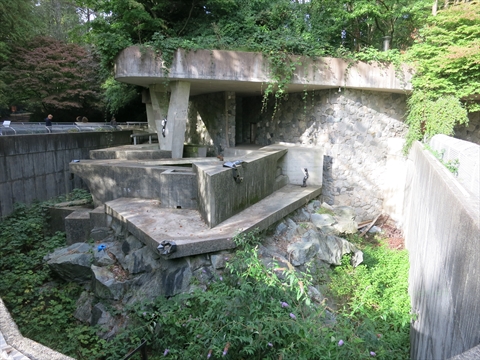
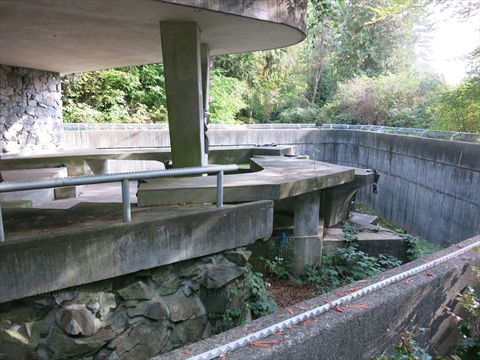
The Polar Bear Compound in Stanley Park is an abandoned concrete enclosure where polar bears were displayed as part of the former Stanley Park Zoo.
The Stanley Park Zoo originated in 1888 when the city's first park superintendent, Henry Avison, captured a black bear cub and secured it to a stump in the park. Over the decades, the zoo expanded to display diverse animals, including penguins, seals, wolves, monkeys, kangaroos, and birds. The zoo reached the peak of its popularity in the 1950s.
The concrete Polar Bear Compound was constructed in 1961. In 1962, a young orphaned polar bear named Tuk arrived after his mother was shot by a hunter in the North. Additional polar bears were later donated by the Hudson's Bay Company.
In 1994, Vancouver voters decided in a civic referendum to phase out the Stanley Park Zoo. By 1996, nearly all animals were relocated to accredited facilities across North America. Tuk, who was considered too old to relocate safely, remained at the compound until his death in December 1997 at age 36, marking the permanent closure of the zoo.
The Polar Bear Compound remains the only major structural remnant of the historic Stanley Park Zoo still standing today.
In the late 1990s, portions of the interior compound were temporarily repurposed as an egg-incubation and spawning site for the nearby Stanley Park Salmon Demonstration Stream.
Polar Bear Spa Proposal
In May 2023, local firm Tony Osborn Architecture and Design (TOAD) unveiled a conceptual architectural proposal titled the 'Polar Bear Sauna'.
"In this proposal, the unused polar bear enclosure would be converted to a Nordic-style public sauna. Borrowing from various sauna cultures around the world, this complex would become a public place for people to congregate, socialize, and rest—especially in the wet winter months when social interaction is in such short supply."
"Imagine dipping into a cold plunge where, only a few decades ago, captive polar bears swam. The site's complicated history would make this sauna unlike any other in the world. It would re-engage a corner of the park that has been off-limits, while adding to the diversity of activities that make Stanley Park so vital."
The proposed design includes covering the curved pool basin to create a cave accessible through a waterfall feature, alongside rain gardens, change rooms, outdoor showers, steam rooms, indoor relaxation lounges, cold plunge pools, hot tubs, and fire pit lounges.
More information: PolarBearSauna.ca Project Details
Polar Bear Compound Plaque
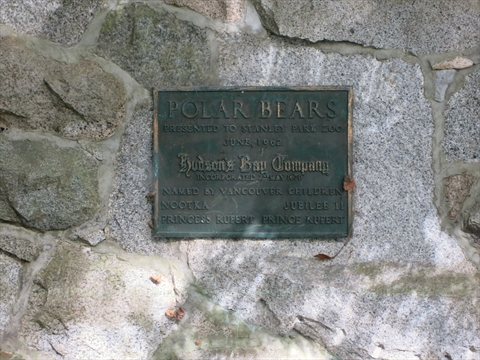
An original brass plaque mounted near the enclosure reads:
POLAR BEARS
Presented to Stanley Park Zoo
June 1962
Hudson's Bay Company
Incorporated 2nd May 1670
Named by Vancouver Children:
Nootka, Jubilee II, Princess Rupert, Prince Rupert
Art Installation Signboard
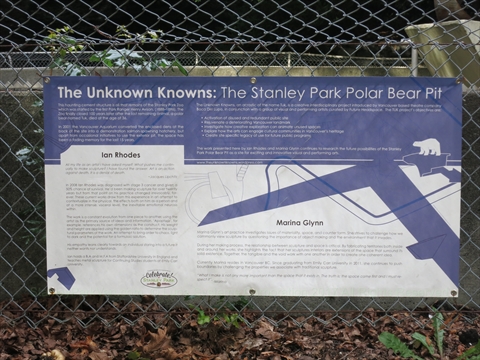
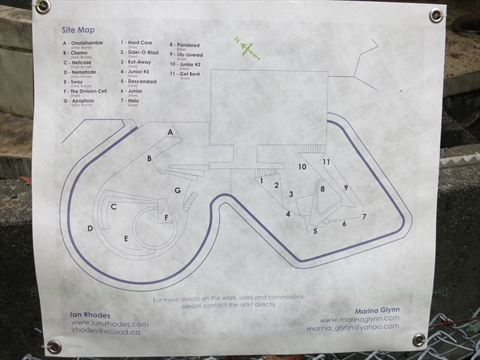
During the 125th Anniversary of Stanley Park, a public art project titled 'Celebrate! Stanley Park' brought temporary art installations to the disused compound. The accompanying signboard notes:
The Unknown Knowns: The Stanley Park Polar Bear Pit
This concrete structure is all that remains of the Stanley Park Zoo, which was established under first Park Ranger Henry Avison (1888–1896). The zoo closed after its last remaining inhabitant, a polar bear named Tuk, passed away at age 36.
The Unknown Knowns (an acrostic of the name TUK) was a creative project spearheaded by Vancouver theatre company Boca Del Lupo alongside visual and performing artists curated by Future Headspace. The project's goals included:
- Activation of a disused and redundant public site
- Rejuvenating a unique Vancouver heritage landmark
- Investigating how creative exploration can animate unused spaces
- Engaging cultural communities with Vancouver's history
- Creating a site-specific legacy for future public programming
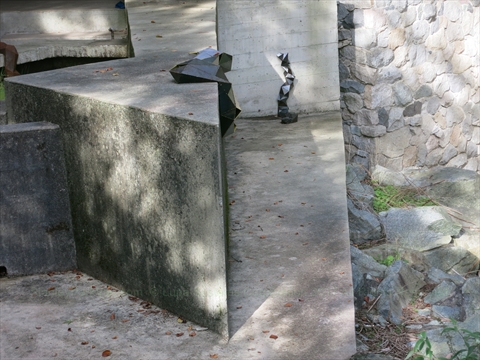
Featured site artists included metal sculptor Ian Rhodes and sculptor Marina Glynn, who utilized spatial geometry and counter-forms within the empty concrete bear pit to explore themes of memory, space, and physical existence.
Project Archive: The Unknown Knowns Project Webpage
Stanley Park Polar Bear Compound Photos
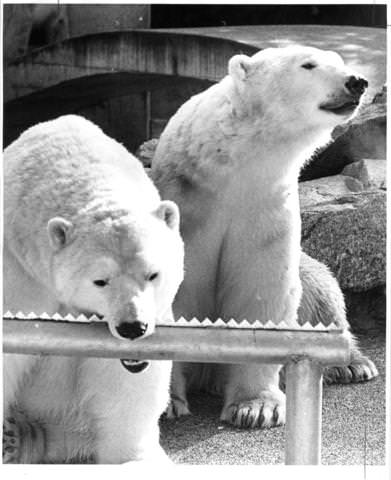
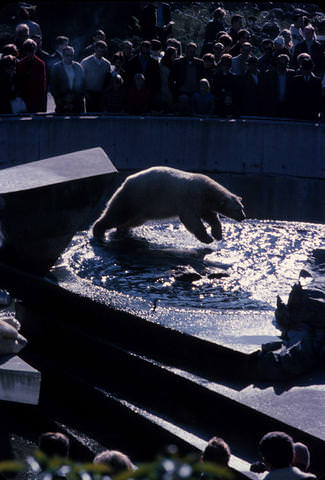
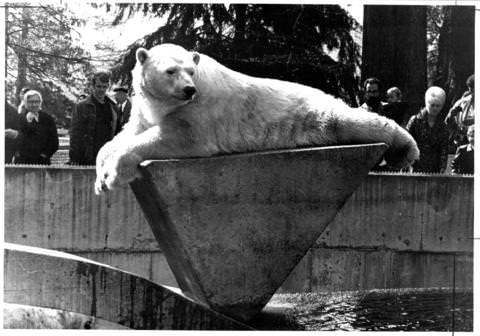
Location & Map
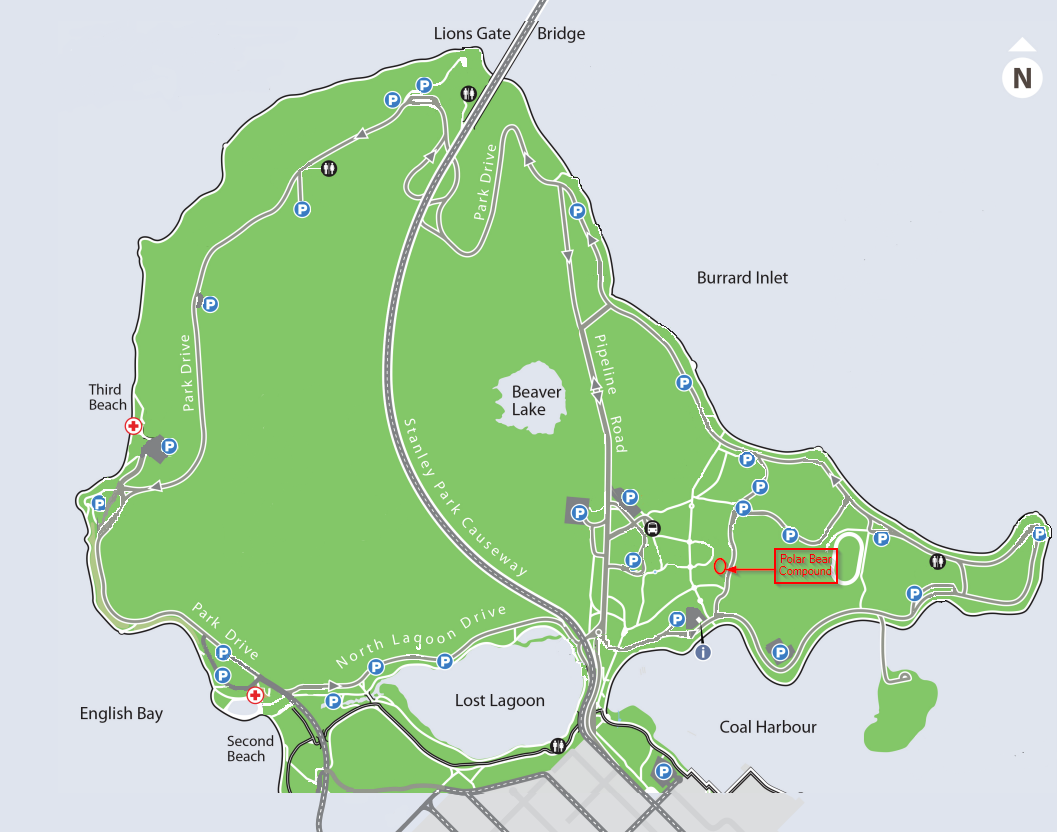
Frequently Asked Questions
By Car: Enter Stanley Park via Georgia Street, follow the main roadway to the traffic circle, and take the first exit onto Stanley Park Drive eastbound. Proceed toward the Information Booth area. Park in either the Information Booth lot or the Vancouver Aquarium lot.
By Bicycle: Ride along the Coal Harbour portion of the Stanley Park Seawall toward the Information Booth plaza, then follow the paved pathway north up Avison Way toward the Vancouver Aquarium.
By Transit: Take TransLink Bus #19 directly to the Stanley Park Bus Loop. From the loop, walk east toward the Vancouver Aquarium; the compound is situated just south of the aquarium entrance.
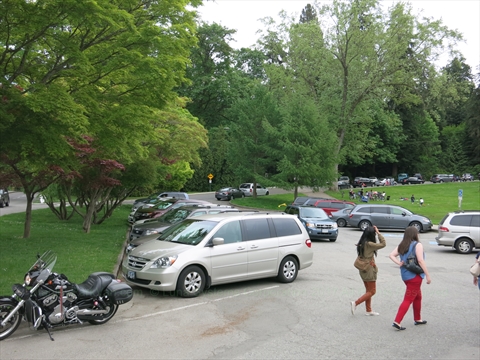
The closest pay-parking options are the Stanley Park Information Booth Parking Lot and the Vancouver Aquarium / Avison Way Parking Lot.
For complete parking information, hourly rates, and seasonal payment rules, read our complete guide to Parking in Stanley Park.