Totem Poles in Stanley Park, Vancouver, Canada
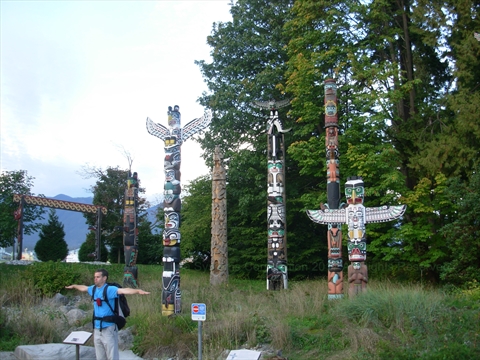
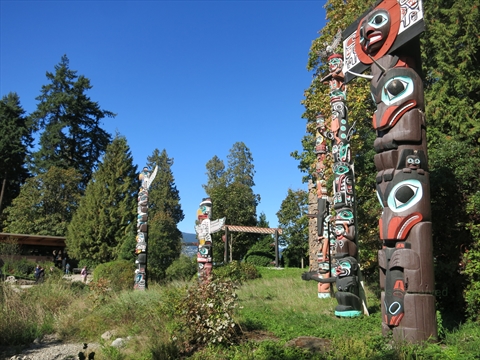
The First Nations Totem Poles in Stanley Park in Vancouver, British Columbia are a collection of stunning totem poles representing a number of distinct indigenous nations.
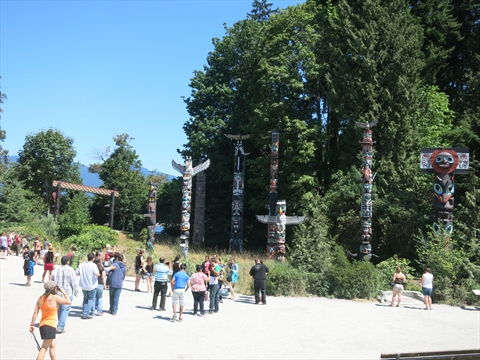
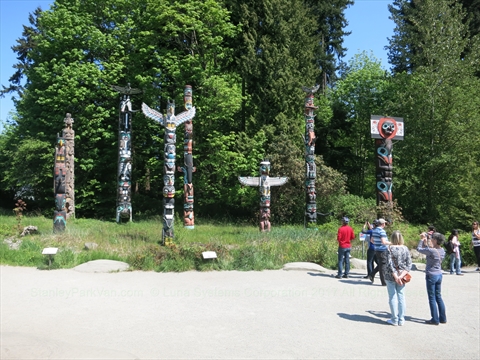
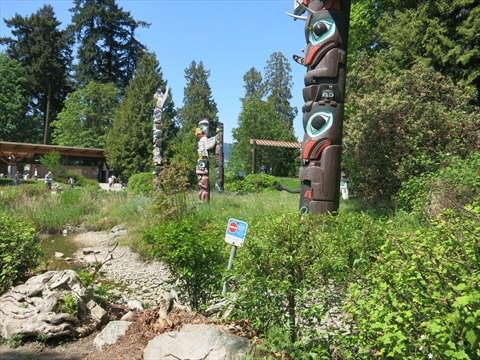
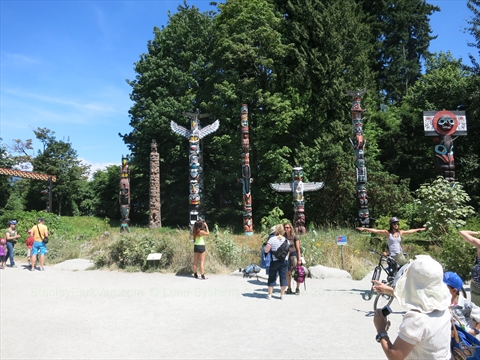
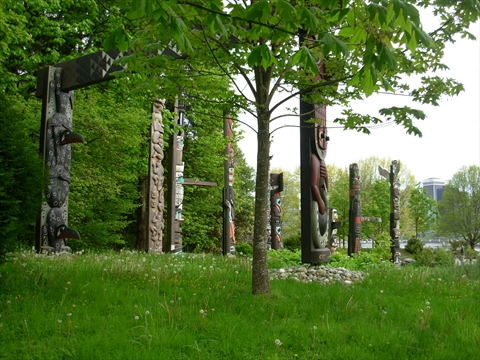
All but three of the individual totem poles, along with three beautifully carved Susan Point Welcome Gateways, are located in a scenic meadow clear space at Brockton Point.
There is one specific pole, the Children of the World, standing at Stanley Park Junction near the main courtyard where the Miniature Train operates.
Additionally, there are two other totem poles erected along the inner tracks of the Miniature Train route that are exclusively viewable by taking the train ride during daylight hours.
The main collection at Brockton Point stands proudly as the most visited attraction in Vancouver, and ranks as one of the highest-capacity tourist destination spaces in all of Canada!
The Totem Poles are a completely free public attraction to access inside Stanley Park. Below is the comprehensive history of the collection and direct links to detailed breakdowns, videos, and photo manifests for each individual pole.
History of the Totem Poles in Stanley Park
The assembly of this world-renowned collection began back in the 1920s when the Vancouver Parks Board started acquiring individual poles, with the initial visionary intent of reconstructing a complete, authentic replica First Nations village site within the park grounds.
Some of these spectacular historic poles were originally carved as early as the 1880s. Throughout the mid-20th century, they were displayed in separate groups at Lumbermens' Arch and near the bluffs of Prospect Point.
In 1962, all of the standalone pieces were structurally consolidated and moved into the central meadow at Brockton Point where they sit today.
By the mid-1980s, the natural elements had left many of the original red cedar installations heavily damaged and rotting. To ensure their long-term preservation, several vulnerable historic poles were moved into protected museums, and exact replica replacements were commissioned from master carvers. The current display area features a protective separated grassy perimeter zone to prevent traffic wear across the root foundations, ensuring the poles stand safe for future generations.
Totem Poles Plaque in Stanley Park
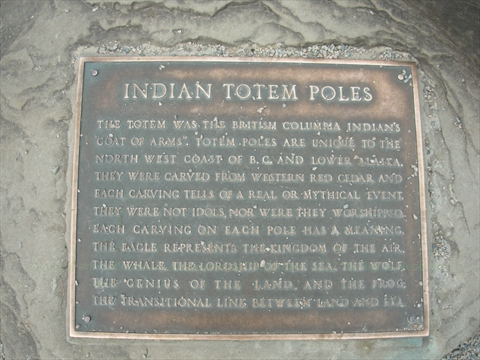
The park display plaque text reads:
INDIAN TOTEM POLES
The Totem was the British Columbia Indian's coat of arms.
Totem poles are unique to the northwest coast of BC and lower Alaska. They were carved from western red cedar and each carving tells of a real or mythical event.
They were not idols, nor were they ever worshipped.
Each carving on each pole has a specific, ancestral meaning. The eagle represents the kingdom of the air. The whale signifies the lordship of the sea. The wolf embodies the genius of the land, and the frog represents the transitional link connecting land and sea.
The Totem Pole Collection
Thunderbird House Post New Narrated Video
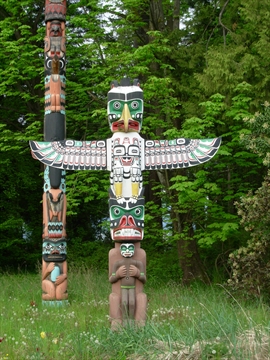
The Thunderbird House Post is a magnificent example of functional indigenous master carving. Structural house posts were traditionally used to support the massive roof beams of traditional First Nations cedar homes.
A complete on-site narrated informational audio video guide has been integrated into this listing to listen to while walking the grounds.
Oscar Maltipi Totem Pole
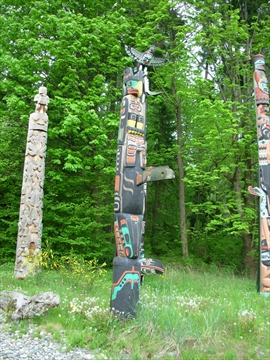
The Oscar Maltipi Totem Pole is an intensely vibrant, beautifully colored Kwakwaka'wakw pole displaying ancestral lineage figures, including the mythical soaring Thunderbird and a crest killer whale.
Chief Skedans Mortuary Totem Pole
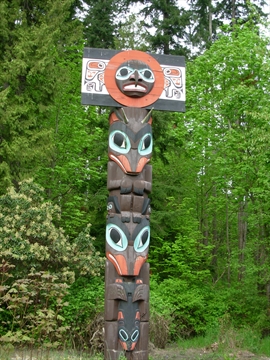
The Chief Skedans Mortuary Totem Pole stands as a powerful memorial marker. Historically, a chief's ancestral remains would be placed in a specifically prepared crest box situated at the top apex of the column.
Chief Wakas Totem Pole
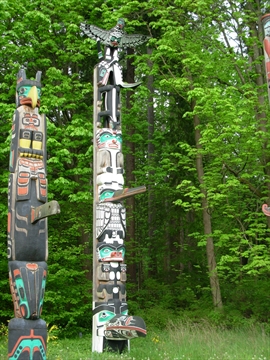
The iconic Chief Wakas Totem Pole was originally designed as a grand house-front portal column for a historic home entranceway. Visitors historically entered the physical longhouse directly through the Raven's open mouth!
Rose Cole Yelton Memorial Totem Pole
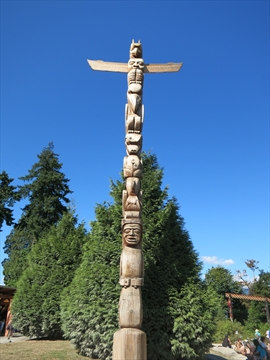
The Rose Cole Yelton Memorial Totem Pole anchors the entranceway sequence to the Brockton Point display clearing.
This poignant installation honours Rose Cole, who was the final surviving lifelong resident of the historic Brockton indigenous community, and pays tribute to all First Nations people who historically lived within the park borders.
Kakaso'Las Totem Pole
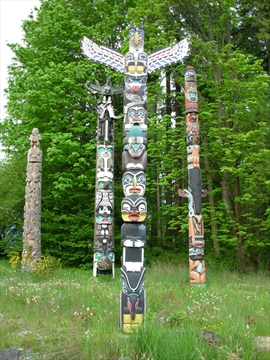
The historic Kakaso'Las Totem Pole was carved by the legendary artist Ellen Neel, recognized as a groundbreaking pioneer of modern Northwest Coast sculpture.
Beaver Crest Totem Pole
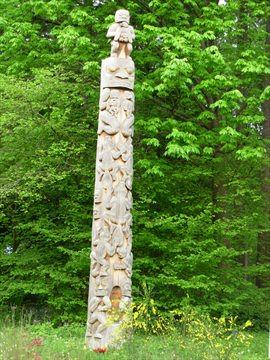
The Nisga'a Beaver Crest Totem Pole is uniquely striking because it lacks heavy modern paint pigments, wings, or outspread beaks. Instead, it showcases incredibly intricate, deep structural relief carving lines on raw cedar.
Ga'akstalas Totem Pole
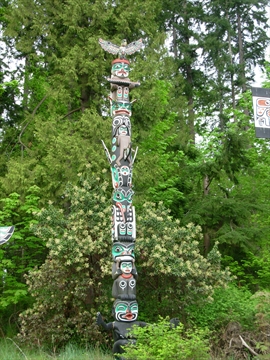
The Ga'akstalas Totem Pole explicitly details important figures across Kwakwaka'wakw oral history, showcasing the Red Cedar-Bark Man who survived the primordial flood and gifted humanity the first canoe.
Sky Chief Totem Pole
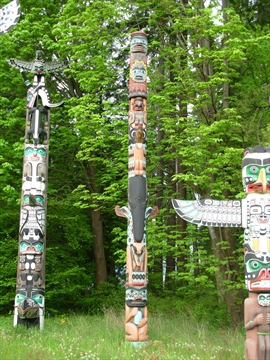
The elegant Kitasoo Sky Chief Totem Pole visually articulates the core cultural tenant that "our traditional art originates straight from a position of deep spirituality".
Totem Poles at Stanley Park Junction
Children of the World Totem Pole
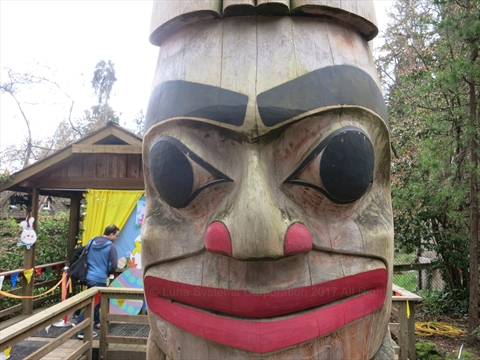
The Children of the World Totem Pole stands as a collaborative monument to international unity. It was carved in 1991 to celebrate the 64th annual Variety Club International Convention held in Vancouver.
This specific installation is situated in the main plaza walking paths of Stanley Park Junction and is completely open and free to view.
Miniature Train Route Totem Poles
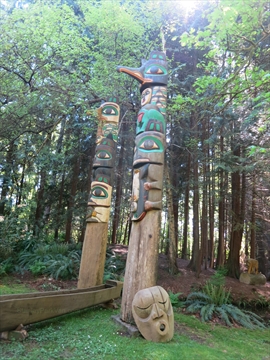
There are two additional historic totem poles positioned deep along the interior forest tracks of the Miniature Train loops.
These specific carvings are nestled completely in the deep forest brush and are only visible by purchasing a daytime ticket for the train ride.
Stanley Park Totem Poles Photo Gallery
Frequently Asked Questions
The primary collection of nine columns sits inside the grassy meadow layout at Brockton Point along the eastern edge of the park peninsula. The Children of the World Totem Pole stands standalone at the railway plaza of Stanley Park Junction, while the final two poles are nested along the tracks of the paid Miniature Train forest run.
You can access the primary Brockton Point clearing by walking, bicycling, driving, or via a commercial guided tour:
- On Foot: Takes roughly 20 minutes along the paved flat layout of the seawall launching from the Coal Harbour entrance.
- By Bicycle: A flat 10-minute ride on the Stanley Park Seawall from the Coal Harbour entrance gates. Note: The seawall bike path is strictly one-way counter-clockwise. To return, you must complete the full 9km park loop (approx. 1 hour) or cut across the internal cross-park roads.
- By Car: Navigate via Stanley Park Drive to the dedicated pay-and-display parking lot directly on-site. If full during peak summer hours, extra parking stalls are available short distances away at the Brockton Oval lot.
- On a Tour: The popular local Horse-drawn Carriage Tour includes a scheduled 5-minute photography stop at the meadow loop.
Yes, fully accessible municipal public restrooms are located immediately next to the primary Brockton Point clearing lawns. More details can be tracked in our Stanley Park Washrooms Guide.
Yes, the local concession kiosk called At the Totem Poles Gift Shop sits right beside the walking paths, offering snacks, refreshments, and artisanal souvenirs or local clothing styles.
While driving tour buses sometimes drop visitors off for a swift 5-to-10-minute photo stop, you should ideally expect to allocate 30 to 60 minutes to properly read the plaques, explore the artwork, and check out the harbor lines.